Seiser Alm panoramic tour: hiking at altitude among light, meadows and silence
If you are looking for a hike that truly stays with you, the panoramic tour of the Seiser Alm (Alpe di Siusi) brings together breathtaking scenery, a slow rhythm and a real sense of freedom.
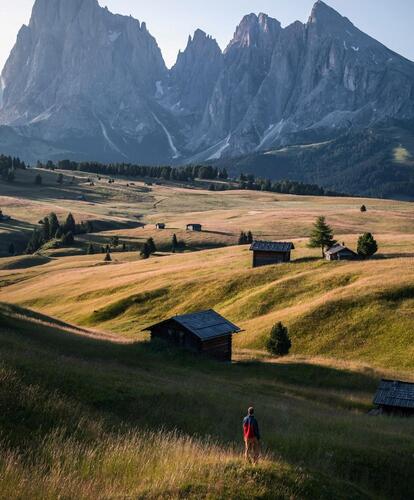
The Seiser Alm plateau covers around 56 km² and lies between 1,600 and 2,958 metres above sea level. These figures alone show how much room there is to breathe and how much the landscape changes with every step. Nobody is in a hurry here. You walk, look into the distance, listen to the grass moving in the wind and rediscover a more human sense of time. The trail network is extensive, with routes both easy and long, always with the Dolomites as a backdrop.
How the Seiser Alm panoramic tour begins
A practical way to start is to head to Seis (Siusi) and take the cable car up to the plateau. The valley station conveniently links the village to the Seiser Alm, so the day begins stress-free and with plenty of energy for the walk. From there, the panoramic tour can take many forms, but the best idea is always the same: plan a gentle loop with stops at the most open spots, alternating stretches of meadow, easy ups and downs and paths past the mountain huts. The plateau has 450 km of clearly signposted trails, so you can adapt distance and elevation gain to your pace and the time you have.
If you would like a simple route to tailor to your needs, you could plan it like this:
- set off from Compaccio (Compatsch) early in the morning, with clear light and fresh air;
- cross the high meadows with views of the Sciliar (Schlern) and the neighbouring Dolomite groups;stop at a mountain hut for a long, unhurried break;
- head back in the afternoon on a wide path, with a steady, relaxed descent.
Flora of the Seiser Alm: plants and flowers from another time
After the first few kilometres, the tour gains depth. It is no longer just a "beautiful view" but an encounter with a botanically valuable environment. The area is part of the Sciliar-Catinaccio (Schlern-Rosengarten) Nature Park, the oldest in South Tyrol, established in 1974, which includes part of the Seiser Alm and a very varied flora. On this mountain the vegetation tells a long story of adaptation to altitude and climate: hundreds of species of flowers and ferns have been recorded in the park. This biodiversity deserves an attentive and respectful eye, so stay on the paths and leave the plants where they grow.
This variety includes some precious botanical species, a few of them closely tied to the Sciliar-Catinaccio area. Official records list, for example, Moretti's bellflower, tufted horned rampion, auricula and several saxifrages. The names sound as if they come from an old herbarium, but on site they become concrete details: the shape of a leaf, a sudden splash of colour, a bloom you only notice when you slow down.
Wildlife: discreet encounters, never intrusive
The plateau and the park are full of wildlife. In the Sciliar-Catinaccio area you may spot roe deer and chamois, while fascinating species such as the golden eagle, the common raven, the alpine chough and other high-altitude birds nest on the rock faces. Fortunately, this is no safari. Encounters here remain discreet, often brief and almost always silent. Bring a small pair of binoculars, keep your voice low and stop in spots sheltered from the wind. The mountain reveals itself best when it is not rushed.
What to see on the Seiser Alm beyond nature
Talking about the Seiser Alm means talking about nature, but also about a landscape that people have lived in and worked for centuries. The area preserves ancient traces of human presence, with evidence dating back to the Bronze Age around Fiè (Völs), Seis and Castelrotto (Kastelruth). Today this relationship continues in more visible forms: managed pastures, mountain huts, refuges, well-kept trails, organised transport with lifts and rules to protect the environment. Human activity and the quality of the landscape need not be in conflict when management is careful and respects the limits of the alpine environment. The balance comes from concrete choices: marked trails, protection of endangered species, responsible gathering and daily care from residents, businesses and visitors.
After a long day on the trails, the hotel makes all the difference. Hotel Villa Madonna fits the holiday style of the Seiser Alm well: a welcoming atmosphere, attention to detail, spaces designed for real relaxation and a clear identity as a gluten-free hotel close to the plateau. The feel of the hotel is warm, friendly and understated. It does not chase special effects, but focuses on genuine comfort and well-being.
A tour to enjoy at a natural pace
The Seiser Alm panoramic tour remains a great choice in every season because it brings together things that rarely sit so well side by side: wide views, real biodiversity, respectful human presence and quality services to recover at the end of the day. If you want a hike that leaves vivid memories, this route keeps its promise. All you need are comfortable boots, a steady pace and the wish to immerse yourself in nature, exploring it without a fixed destination.